Generally speaking field devices have inputs for 3 wire sensors to. An rtd resistance temperature detector is a sensor whose resistance changes as its temperature changes.
2 3 4 Wire Rtd Circuit Circuitlab
Rtd sensor wiring diagram. Rtd technical data see also. The lead wire resistance is factored out as long as all of the lead wires have the same resistance. June 17 2019 by larry a. R1 r2 and r3 are fixed resistors. A wiring diagram is a streamlined standard photographic depiction of an electrical circuit. Eo is the output voltage.
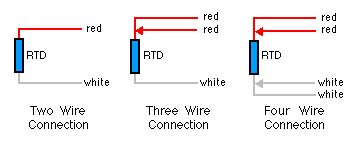
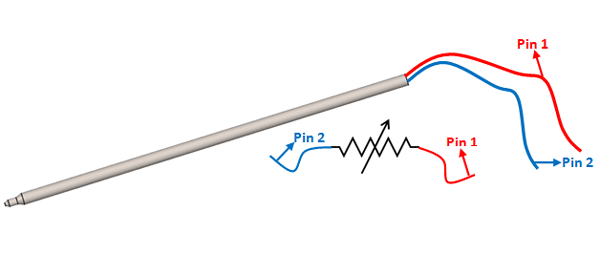
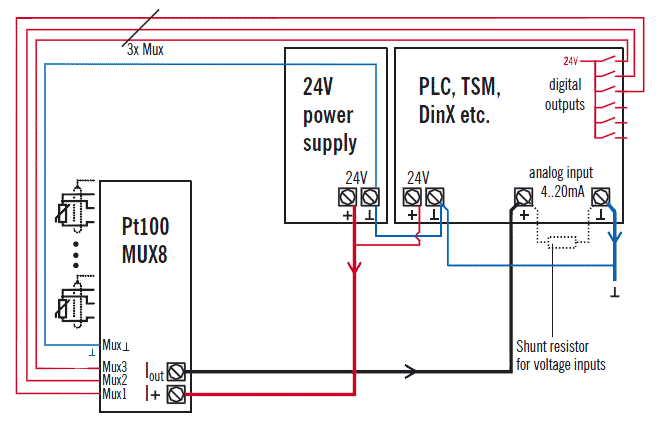
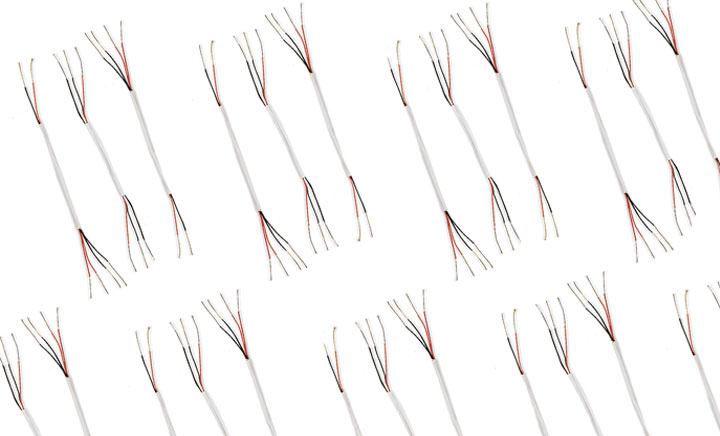
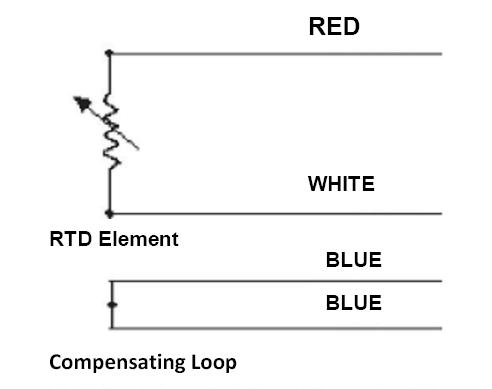
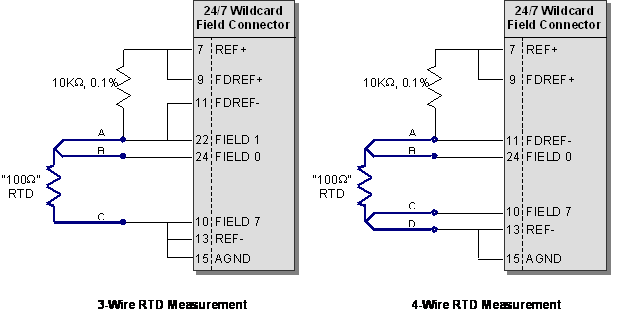
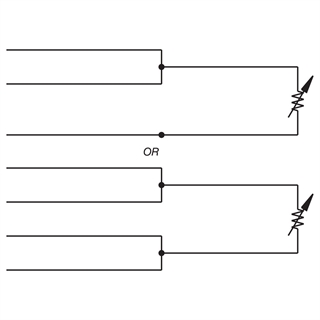
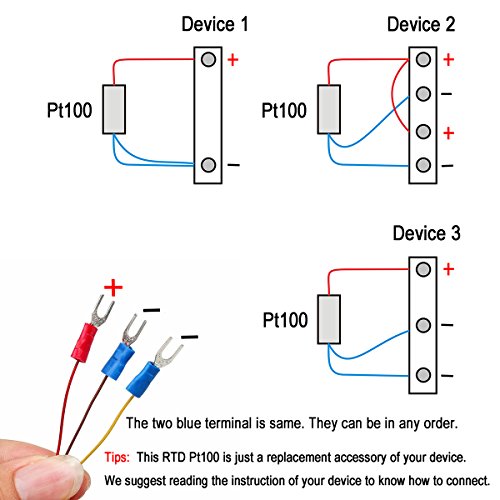
This is the easiest wiring you can just use either terminal block slot on the sides for each wire. When wiring with two wires first jumper across a1 and b1and a2 and b2 respectively then connect pt100 sensors and to the rtd module according to the following diagram on the left. There are 2 wiring methods for the rtd module and pt100 temperature sensors two wire and three wire connections. Difference between 2 wire rtd 3 wire rtd and 4 wire rtds rtds resistance temperature detectors are offered with 2 3 or 4 lead configuration. In this article the possible wiring alternatives for rtd probes are explained. An rtd is a passive device.
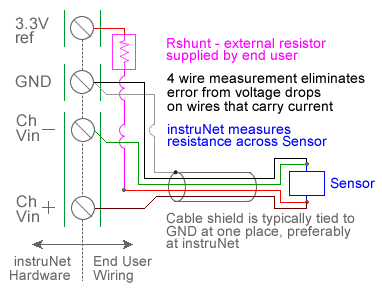
Connect the black or white lead on the negative side for the resistive. Otherwise errors can result. The following connection diagrams illustrate how to connect various rtd types to your daq device. And rt is the rtd. 4 wire rtd signal connection connect each of the red leads on the positive side of the resistive element to the excitation positive and channel positive on the daq device. Es is the supply voltage.
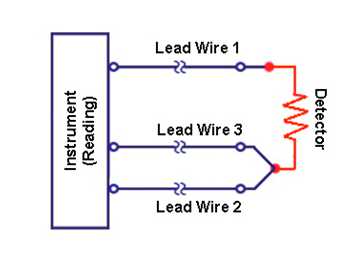
Then either solder closed the jumpers next to the rtd terminal block or put little wires in the right and left terminal blocks to short them together. The resistance increases as the temperature of the sensor increases. Shown is a 2 wire rtd connected to a typical wheatstone bridge circuit. Sensors using the 3 wire construction are the most common design found in industrial process and monitoring applications. The resistance vs temperature relationship is well known and is repeatable over time. The best configuration for a specific application depends on a number of factors however the sensor configuration must match with transmitter otherwise leadwire resistance cancellation circuitry.
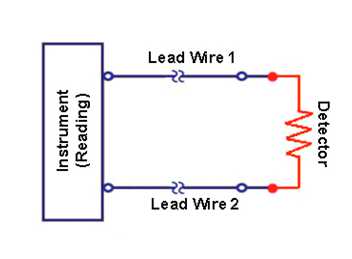
In this uncompensated circuit lead resistance l1 and l2 add. 3 wire rtd connections the 3 wire rtd configuration is the most commonly used rtd circuit design and can be seen in industrial process and monitoring applications. A1b1 a2b2 and c1c2. It shows the components of the circuit as streamlined shapes and also the power and also signal links between the gadgets. The 3 wire rtd uses 1 additional wire and the 4 wire rtd uses 2 additional wires to compensate for the wire resistance. It does not produce an output on its own.
Normally a 2 wire rtd will lose accuracy due to the resistance in the cable which can be thousands of feet long. A 2 wire rtd configuration is the most useful with high resistance sensors or in applications where a great deal of accuracy is not required. Wellborn assortment of rtd pt100 3 wire wiring diagram.
Gallery of Rtd Sensor Wiring Diagram